
Plant Kingdom Notes
Study Notes
Topics
7Chapter Overview
Overview
Plant Kingdom explains how plants are classified from simple aquatic algae to advanced flowering angiosperms. NCERT classification mainly considers body organization, vascular tissues, seed formation, flower formation, and dominant phase of life cycle. Algae are mostly aquatic thallophytes; bryophytes are amphibians of the plant kingdom; pteridophytes are first vascular cryptogams; gymnosperms have naked seeds; angiosperms bear flowers, fruits, and double fertilisation. A major NEET theme is alternation of generations, where haploid gametophyte and diploid sporophyte phases alternate. As evolution proceeds, the sporophyte becomes more dominant, vascular tissues become better developed, and reproduction becomes less dependent on water.
- 1Cryptogams include algae, bryophytes, and pteridophytes because reproductive organs are hidden and seeds are absent.
- 2Phanerogams include gymnosperms and angiosperms because seed-bearing reproductive structures are visible.
- 3Vascular tissues first appear in pteridophytes.
- 4Seeds first appear in gymnosperms among the NCERT groups discussed here.
- 5Flowers and fruits are exclusive to angiosperms.
- 6Water dependence for fertilisation decreases from algae and bryophytes toward seed plants.
- 7Heterospory in some pteridophytes is considered a precursor to seed habit.
Order of Plant Groups
Remember: A Brave Plant Gives Apples = Algae, Bryophytes, Pteridophytes, Gymnosperms, Angiosperms.
Seed Rule
Gymnosperms are gym-clothed seeds: seeds are naked. Angiosperms are enclosed inside fruit.
Evolution in a Garden
A pond alga, a damp-wall moss, a fern, a pine tree, and a mango tree together represent the major evolutionary steps of the plant kingdom.
NEET Example
If a plant has vascular tissue but no seeds, it is most likely a pteridophyte, such as Pteris or Selaginella.
Confusing spores and seeds
Spores are single-celled reproductive units in algae, bryophytes, and pteridophytes. Seeds are multicellular structures with embryo and stored food, found in gymnosperms and angiosperms.
Assuming all plants have roots
Algae have thallus, bryophytes have rhizoids, while true roots appear clearly in pteridophytes and seed plants.
This is the core life-cycle logic used repeatedly in Plant Kingdom. Meiosis produces spores, while mitosis produces gametes in plants.
Variables
n=Haploid chromosome number, typical of spores, gametes, and gametophyte
2n=Diploid chromosome number, typical of zygote and sporophyte
Algae
Overview
Algae are chlorophyll-bearing, simple, mostly aquatic organisms with a thalloid body that is not differentiated into true roots, stems, and leaves. They occur in freshwater, marine water, moist soil, tree trunks, and even in association with fungi as lichens. NCERT classifies algae mainly into Chlorophyceae, Phaeophyceae, and Rhodophyceae based on pigments, stored food, cell wall composition, and flagellation. Reproduction may be vegetative, asexual, or sexual, and sexual reproduction may be isogamous, anisogamous, or oogamous. Algae show life cycles such as haplontic, diplontic, and haplo-diplontic. They are ecologically important as oxygen producers and economically useful as food, agar, algin, carrageenan, and biofertilizer.
- 1Chlamydomonas and Volvox show motile stages with flagella; Spirogyra has non-motile gametes.
- 2Brown algae are mostly marine and include large kelps.
- 3Red algae can live at greater depths due to phycoerythrin absorbing blue-green light.
- 4Fucus shows a diplontic life cycle, while many green algae show haplontic life cycle.
- 5Ectocarpus and Polysiphonia show haplo-diplontic life cycles.
- 6NEET often asks pigment, food reserve, cell wall, flagella, and examples together.
Algal Classes
Green-CBS, Brown-FLAM, Red-PF: Green has Chlorophyll b and Starch; Brown has Fucoxanthin, Laminarin, Algin, Mannitol; Red has Phycoerythrin and Floridean starch.
Agar Sources
Remember GG gives jelly: Gelidium and Gracilaria give agar.
PYQ Concept
If an alga is marine, brown, has fucoxanthin, stores laminarin and mannitol, and has unequal lateral flagella, identify it as Phaeophyceae.
Daily Life
Agar used in microbiology labs to grow bacteria is obtained from red algae such as Gelidium and Gracilaria.
Flagella in red algae
Do not assign flagellated gametes to Rhodophyceae. Red algae generally lack flagellated stages.
Food reserve confusion
Green algae store starch, brown algae store laminarin and mannitol, and red algae store floridean starch.
Fucus life cycle
Fucus is diplontic, not haplontic. Many students wrongly generalize all algae as haplontic.
Algae are major aquatic photosynthesizers and contribute greatly to oxygen production.
Variables
CO2=Carbon dioxide used as carbon source
H2O=Water used during photosynthesis
C6H12O6=Glucose or carbohydrate formed
O2=Oxygen released
Bryophytes
Overview
Bryophytes are small, non-vascular plants that live mainly in moist, shaded places. They are called amphibians of the plant kingdom because they can live on land but require water for sexual reproduction. Their dominant, independent, photosynthetic phase is the gametophyte, which may be thalloid as in liverworts or leafy as in mosses. True roots, stems, and leaves are absent; instead, rhizoids help in anchorage. Sex organs are multicellular: antheridia produce male gametes and archegonia produce eggs. After fertilisation, the zygote forms a dependent sporophyte consisting of foot, seta, and capsule in mosses. Bryophytes show clear alternation of generations and are important in soil formation, succession, and peat formation.
- 1Bryophytes are the first land plants but still depend on water for male gamete transfer.
- 2The gametophyte is more conspicuous than sporophyte.
- 3Antherozoids are flagellated and swim to the archegonium.
- 4Sporophyte produces haploid spores by meiosis inside the capsule.
- 5Protonema is the juvenile filamentous stage in moss life cycle.
- 6Sphagnum forms peat and has high water-holding capacity.
- 7Bryophytes help ecological succession by colonizing bare rocks with lichens.
Bryophyte Identity
BRYO = Bring Rain, Your Offspring swims. Bryophytes need water for fertilisation.
Moss Sporophyte Parts
FSC = Foot, Seta, Capsule; think of a moss sporophyte as standing on its Foot, holding a Seta stalk and Capsule.
Marchantia
Marchantia reproduces vegetatively by gemmae in gemma cups, a frequent NCERT-based question.
Sphagnum
Sphagnum forms peat, used as fuel and packing material due to high water retention.
Calling rhizoids true roots
Rhizoids only anchor and absorb water; they are not true roots because bryophytes lack vascular tissues.
Wrong dominant phase
Bryophytes are gametophyte dominant, unlike pteridophytes, gymnosperms, and angiosperms.
Ignoring embryo retention
Bryophytes retain the zygote in archegonium, so they are embryophytes, unlike algae.
Bryophytes have dominant gametophyte and dependent sporophyte, making this formula very important for NEET.
Variables
n=Haploid gametophyte, gametes, and spores
2n=Diploid zygote and sporophyte
Pteridophytes
Overview
Pteridophytes are the first terrestrial plants with well-developed vascular tissues, true roots, stems, and leaves, but they do not produce seeds. Their main plant body is a diploid sporophyte, while the gametophyte is small, independent, and often called a prothallus. They reproduce through spores produced in sporangia, usually grouped in sori or strobili. Most pteridophytes are homosporous, producing one type of spore, but Selaginella and Salvinia are heterosporous, producing microspores and megaspores. Heterospory is a major evolutionary step toward seed habit. Sexual reproduction still requires water because male gametes are motile. NEET frequently asks their vascular nature, dominant sporophyte, spore types, and examples.
- 1Pteridophytes include Psilopsida, Lycopsida, Sphenopsida, and Pteropsida in classical NCERT treatment.
- 2Sporophyte is independent and dominant, unlike bryophytes.
- 3Homosporous forms produce one type of spore; heterosporous forms produce microspores and megaspores.
- 4Microspores form male gametophytes and megaspores form female gametophytes.
- 5Retention of megaspore in some heterosporous pteridophytes suggests origin of seed habit.
- 6They are used as ornamentals, soil binders, and medicinal plants.
Heterosporous Examples
SeSa has Separate spores: Selaginella and Salvinia are heterosporous.
Vascular Cryptogam
PTERI = Pipes There, Embryo Reproduces In spores. Pipes means vascular tissues are present; seeds are absent.
PYQ Concept
A plant with vascular tissue, spores, no seeds, and dominant sporophyte is a pteridophyte.
Garden Example
Ferns grown as ornamental plants show large fronds, sori, and a dominant sporophyte.
Calling pteridophytes seed plants
They are vascular but seedless. Presence of xylem and phloem does not mean seed formation.
Forgetting water requirement
Even though pteridophytes are vascular land plants, fertilisation still needs water because male gametes are motile.
Heterospory examples
Do not list Pteris as heterosporous. Standard NCERT examples are Selaginella and Salvinia.
This formula highlights that the visible fern-like plant is sporophyte, not gametophyte.
Variables
2n=Diploid sporophyte and zygote
n=Haploid spores, gametophyte, and gametes
Gymnosperms
Overview
Gymnosperms are vascular seed plants in which ovules are not enclosed by an ovary; therefore, seeds remain naked. They are usually perennial, evergreen, and woody, with true roots, stems, and leaves. Roots may show special associations, such as coralloid roots in Cycas with nitrogen-fixing cyanobacteria and mycorrhizal roots in Pinus. Leaves are often needle-like or scale-like to reduce water loss. Gymnosperms are heterosporous, producing microspores and megaspores in male and female cones. Pollination occurs mainly by wind, and fertilisation produces an embryo inside a naked seed. Unlike angiosperms, fruits and double fertilisation are absent. NEET commonly tests naked ovules, cone structure, archegonia, examples, and adaptations.
- 1Gymnosperm seeds are not enclosed within fruits because ovary is absent.
- 2Reduced gametophytes are dependent on sporophyte.
- 3Pollen grains represent male gametophytes.
- 4Female gametophyte is retained within ovule and may contain archegonia.
- 5Conifers such as Pinus show xerophytic adaptations like needle leaves and sunken stomata.
- 6Ginkgo is called a living fossil.
- 7Gymnosperms provide timber, resins, essential oils, and ornamental value.
Gymnosperm Meaning
Gymno = naked, sperm = seed. Gymnosperms have naked seeds.
Special Roots
Cycas is Coral-like, Pinus is Partnered with fungus: Cycas has coralloid roots, Pinus has mycorrhiza.
Pinus
Pinus has needle-like leaves, resin canals, mycorrhizal roots, and separate male and female cones.
NEET Concept
If ovules are exposed and seeds are not enclosed in fruits, the plant belongs to gymnosperms.
Calling cones flowers
Gymnosperms have cones or strobili, not true flowers. Flowers are angiosperm structures.
Assuming seeds mean fruits
Gymnosperms have seeds but no fruits because ovary is absent.
Double fertilisation error
Double fertilisation is a defining feature of angiosperms, not gymnosperms.
This summarizes how gymnosperms overcome free-water dependence and produce seeds without fruit.
Variables
Megaspore=Spore that forms female gametophyte inside ovule
Pollen tube=Tube carrying male gametes toward egg
Embryo=Young sporophyte inside seed
Angiosperms
Overview
Angiosperms are the most advanced and diverse plant group. They possess flowers, fruits, and seeds enclosed within an ovary that matures into fruit. Their dominant plant body is the diploid sporophyte with well-developed roots, stems, leaves, and vascular tissues. Angiosperms are divided into monocots and dicots based on cotyledon number, venation, root system, vascular bundles, and floral parts. Their defining reproductive feature is double fertilisation: one male gamete fuses with the egg to form the zygote, while the other fuses with two polar nuclei to form triploid endosperm. This makes nutrient formation efficient and embryo-supporting. Angiosperms are economically vital as sources of food, fibres, medicines, oils, timber, spices, and ornamental plants.
- 1Angiosperms have highly reduced male and female gametophytes.
- 2Pollen grain represents male gametophyte.
- 3Embryo sac represents female gametophyte, usually 7-celled and 8-nucleate.
- 4Double fertilisation is unique to angiosperms.
- 5Endosperm is generally triploid and nourishes the embryo.
- 6Fruits protect seeds and help dispersal.
- 7NEET often asks monocot-dicot differences and double fertilisation products.
Monocot vs Dicot
Monocot = One, lines, fibers, threes. Dicot = Two, net, tap, fours or fives.
Double Fertilisation
One makes Baby, one makes Buffet: one male gamete forms zygote, the other forms nutritive endosperm.
Monocot Example
Maize has one cotyledon, parallel venation, fibrous roots, and floral parts generally in multiples of three.
Dicot Example
Pea has two cotyledons, reticulate venation, tap root system, and floral parts commonly in multiples of five.
PYQ Concept
If a question asks for a unique feature of angiosperms, choose double fertilisation.
Triple fusion vs double fertilisation
Triple fusion is one event: male gamete plus two polar nuclei. Double fertilisation includes syngamy plus triple fusion.
Endosperm ploidy
In most angiosperms, endosperm is triploid, not diploid.
Seed and fruit origin
Ovule becomes seed, ovary becomes fruit. Do not interchange them.
This is the most important angiosperm reproductive formula for NEET.
Variables
2n zygote=Diploid cell that develops into embryo
3n endosperm=Triploid nutritive tissue formed by triple fusion
Polar nuclei=Two haploid nuclei in the central cell of embryo sac
Quick Revision
Overview
This topic compresses the whole Plant Kingdom chapter into exam-ready patterns. For NEET, do not study each plant group as isolated facts; compare them by plant body, vascular tissue, reproductive unit, dominant generation, fertilisation requirement, and examples. Algae are thalloid and mostly aquatic. Bryophytes are non-vascular land plants with dominant gametophyte. Pteridophytes are vascular but seedless, with dominant sporophyte. Gymnosperms are seed plants with naked ovules and cones. Angiosperms are flowering plants with enclosed seeds, fruits, and double fertilisation. The most repeated questions involve algae pigments and reserves, bryophyte dependence on water, heterospory, gymnosperm cones, monocot-dicot differences, and double fertilisation.
- 1Always identify the group by the most advanced structure present.
- 2For algae, revise pigment plus stored food plus flagella together.
- 3For bryophytes, remember antheridia, archegonia, and dependent sporophyte.
- 4For pteridophytes, heterospory is the bridge toward seed habit.
- 5For gymnosperms, naked seed and absence of fruit are decisive.
- 6For angiosperms, double fertilisation is the unique feature.
Classification Order
A Brave Pupil Grew Apples = Algae, Bryophytes, Pteridophytes, Gymnosperms, Angiosperms.
NEET Feature Ladder
Vascular, Seed, Flower: Pteridophytes get vascular tissue, gymnosperms get seeds, angiosperms get flowers.
Rapid Identification
Question says: plant has true roots, vascular tissue, spores, and no seeds. Answer: pteridophyte.
Rapid Identification
Question says: plant has ovary, fruit, and double fertilisation. Answer: angiosperm.
Overlooking the word naked
Naked seeds always indicate gymnosperms, not angiosperms.
Misreading gametophyte dominance
Only bryophytes among land plant groups have the dominant independent gametophyte.
Confusing algae examples
Porphyra is red alga, Fucus is brown alga, Spirogyra is green alga.
Use this as a rapid elimination tool in assertion-reason and match-the-column questions.
Variables
Thallus=Undifferentiated plant body
Vascular spores=Vascular plant body reproducing by spores without seeds
Mind Map
Overview
The Plant Kingdom mind map helps connect facts that are often memorized separately. Start from the central idea: plants are classified by body differentiation, vascular tissue, seeds, flowers, and life cycle. Algae are simple thallophytes. Bryophytes move to land but remain non-vascular and water-dependent. Pteridophytes introduce vascular tissues but still reproduce by spores. Gymnosperms introduce seeds but keep them naked on sporophylls or cones. Angiosperms enclose ovules inside ovaries, form fruits, and perform double fertilisation. This map is useful for last-day revision because it connects examples, dominant phases, reproductive structures, and evolutionary trends in one visual framework.
- 1Mind maps are best used for comparison-based NEET questions.
- 2Each branch should be connected to one or two decisive keywords.
- 3Examples must be linked to their group, not memorized randomly.
- 4Life-cycle dominance should be revised along with plant group.
- 5Economic importance is often asked from algae, bryophytes, gymnosperms, and angiosperms.
- 6Heterospory is the conceptual bridge from pteridophytes to seed plants.
Mind Map Reading Direction
Read clockwise as Simple, Moist, Vascular, Naked, Flowering: algae, bryophytes, pteridophytes, gymnosperms, angiosperms.
Five Diagnostic Words
Thallus, Rhizoids, Vascular, Naked, Double: these five words recall the five major groups.
Mind Map Use Case
If a question gives 'vascular plant, no seed, heterospory', follow the map from vascular to seedless and answer pteridophyte.
Mind Map Use Case
If a question gives 'pollen, ovule inside ovary, triploid endosperm', follow the map to angiosperms.
Making isolated flashcards only
Plant Kingdom questions are often comparative. Always connect example, feature, and life cycle.
Skipping economic importance
Agar, algin, peat, timber, fibres, cereals, and medicines are repeatedly asked as direct NCERT facts.
A visual formula for the evolutionary sequence in the chapter.
Variables
Thallus=Simple undifferentiated plant body of algae
Rhizoids=Anchoring structures of bryophytes
Vascular tissue=Xylem and phloem, first prominent in pteridophytes
Naked seed=Gymnosperm seed not enclosed in fruit
Formula Sheet
10This is the core life-cycle logic used repeatedly in Plant Kingdom. Meiosis produces spores, while mitosis produces gametes in plants.
Variables
n=Haploid chromosome number, typical of spores, gametes, and gametophyte
2n=Diploid chromosome number, typical of zygote and sporophyte
This sequence summarizes increasing complexity in plant body, vascular tissue, reproductive independence from water, and protection of embryo or seed.
Variables
<=Represents increasing evolutionary advancement and structural complexity
Algae are major aquatic photosynthesizers and contribute greatly to oxygen production.
Variables
CO2=Carbon dioxide used as carbon source
H2O=Water used during photosynthesis
C6H12O6=Glucose or carbohydrate formed
O2=Oxygen released
This rule helps solve NEET questions on Chlamydomonas, Fucus, Ectocarpus, and Polysiphonia.
Variables
n=Haploid generation
2n=Diploid generation
Bryophytes have dominant gametophyte and dependent sporophyte, making this formula very important for NEET.
Variables
n=Haploid gametophyte, gametes, and spores
2n=Diploid zygote and sporophyte
5 more formulas locked
Sign up free to access all formulas with variables and explanations.
Quick Revision
12 Sign up to accessUnlock 12 Quick Revision Points
Sign up free to access all content, practice PYQs, and get AI explanations.
Learning Videos
6 Sign up to access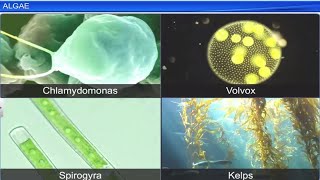

Unlock 6 Learning Videos
Sign up free to access all content, practice PYQs, and get AI explanations.
NEET PYQs — Plant Kingdom
25 Sign up to accessShowing 3 of 25 questions. Sign up to practice all with answers, explanations, and AI help.
In which one of the following, the ovules are not enclosed by an ovary wall and remain exposed?
Match the plant with the kind of life cycle it exhibits:
Which one is wrongly matched?
Unlock the full Plant Kingdom experience
All diagrams, videos, quick revision, PYQ practice with AI explanations — plus mock tests, flashcards, and a personalised study plan.