
Chemical Bonding and Molecular Structure Notes
Study Notes
Topics
6Chapter Overview
Overview
Chemical Bonding and Molecular Structure explains why atoms combine, how bonds form, and why molecules have definite shapes and properties. Atoms bond mainly to attain lower energy and more stable electronic arrangements, often resembling noble gas configurations. Ionic bonding involves electron transfer and electrostatic attraction, while covalent bonding involves sharing of electron pairs. Bond parameters such as bond length, bond angle, bond enthalpy, bond order and polarity help compare molecules. VSEPR theory predicts shapes using electron-pair repulsions. Valence bond theory explains overlap and hybridization, while molecular orbital theory explains bonding using delocalized molecular orbitals and predicts magnetic behavior. Hydrogen bonding, metallic bonding and weak interactions explain many physical properties important for NEET.
- 1The driving force for bonding is lowering of potential energy and attaining stability.
- 2Octet rule is useful but not universal; many molecules show incomplete, expanded or odd-electron octets.
- 3Molecular shape depends on electron-pair geometry and the number of lone pairs on the central atom.
- 4Greater bond order generally means shorter and stronger bonds.
- 5Polarity depends on electronegativity difference and molecular geometry.
- 6NEET frequently asks VSEPR shapes, hybridization, bond order, magnetic nature and hydrogen bonding trends.
Chapter Flow Trick
Think: Why bond? How bond? How strong? What shape? Which orbitals? Which MOs? Which forces? This sequence covers the chapter.
NEET Priority Trick
Shape, hybridization and bond order are the three fastest-scoring areas. Revise VSEPR table, hybridization table and MOT order repeatedly.
Water as a Complete Example
H2O has polar covalent O-H bonds, bent shape, sp3 hybridization on oxygen, two lone pairs and strong hydrogen bonding, giving high boiling point.
Oxygen as a Complete Example
Lewis theory shows O=O, but molecular orbital theory explains why O2 is paramagnetic due to two unpaired electrons in antibonding π orbitals.
Treating all bonds as purely ionic or purely covalent
Most real bonds have partial ionic and partial covalent character. Electronegativity difference and polarization decide the extent.
Confusing electron-pair geometry with molecular shape
Electron-pair geometry includes lone pairs; molecular shape describes only atom positions.
For simple Lewis structures, single, double and triple bonds have bond orders 1, 2 and 3 respectively.
Variables
bond order=number of shared electron pairs between two bonded atoms
Used in molecular orbital theory to predict stability, bond length and magnetic behavior.
Variables
Nb=number of electrons in bonding molecular orbitals
Na=number of electrons in antibonding molecular orbitals
Ionic & Covalent Bonding
Overview
Ionic and covalent bonding are the two basic ways atoms combine. Ionic bonding involves transfer of electrons from an electropositive atom to an electronegative atom, producing oppositely charged ions held by electrostatic attraction. It is favored by low ionization enthalpy, high electron gain enthalpy and high lattice enthalpy. Covalent bonding involves sharing of electron pairs between atoms, usually non-metals, to attain stable valence-shell arrangements. Lewis dot structures show valence electrons, bonding pairs and lone pairs. The octet rule is useful but has exceptions such as BF3, PCl5, SF6 and NO. Formal charge helps choose the best Lewis structure, while resonance explains delocalization when one structure is insufficient. Polar covalent bonds arise due to unequal sharing of electrons.
- 1Ionic bond formation is favorable when the energy released by lattice formation compensates energy required for ion formation.
- 2Covalent bonds may be single, double or triple depending on number of shared electron pairs.
- 3A coordinate bond is a covalent bond in which both shared electrons are donated by one atom.
- 4Smaller highly charged cations and larger highly charged anions increase covalent character in ionic compounds.
- 5Best Lewis structures usually have minimum formal charge and negative formal charge on more electronegative atoms.
- 6Resonance increases stability and equalizes bond lengths in molecules such as CO3 2−, NO3− and benzene.
Fajan’s Rule Trick
Small, highly charged cation + large, highly charged anion = more covalent character. Remember: 'small cat squeezes big anion cloud'.
Formal Charge Shortcut
Formal charge = Valence minus Lone minus half Bonding. Say: V-L-half B.
NaCl
Sodium loses one electron to form Na+, chlorine gains it to form Cl−, and electrostatic attraction forms an ionic crystal.
CO3 2− Resonance
Carbonate ion has three equivalent resonance structures, so all C-O bonds have equal length and partial double-bond character.
NH4+ Coordinate Bond
NH3 donates its lone pair to H+ to form NH4+. After formation, all N-H bonds become equivalent.
Assuming octet rule is always followed
Octet rule fails for electron-deficient molecules, odd-electron molecules and expanded-octet molecules.
Confusing resonance with rapid flipping
Resonance structures do not interconvert. The real molecule is a resonance hybrid with delocalized electrons.
Ignoring lattice enthalpy
Ionic compound stability is not decided only by ionization enthalpy and electron gain enthalpy; lattice enthalpy is crucial.
Used to evaluate Lewis structures by comparing valence electrons of a free atom with assigned electrons in the molecule.
Variables
V=number of valence electrons in the free atom
L=number of lone-pair electrons on the atom
B=number of bonding electrons around the atom
A polar covalent bond has separated partial charges, producing a bond dipole.
Variables
μ=dipole moment
q=magnitude of separated charge
r=bond length or distance between charge centers
Bond Parameters
Overview
Bond parameters are measurable quantities that describe the nature, strength and geometry of chemical bonds. Bond length is the equilibrium distance between two bonded nuclei and generally decreases as bond order increases. Bond angle is the angle between two bonds around a central atom and is strongly influenced by hybridization and lone-pair repulsion. Bond enthalpy measures the energy required to break a bond in the gaseous state and indicates bond strength. Bond order represents the number of bonds between atoms or, in molecular orbital theory, half the difference between bonding and antibonding electrons. Dipole moment measures polarity and depends on both bond polarity and molecular shape. NEET often asks trend comparisons using these parameters.
- 1Bond length is affected by atomic size, bond order, resonance and hybridization.
- 2More s-character in hybrid orbitals usually gives shorter and stronger bonds.
- 3Bond enthalpy is always positive for bond dissociation because energy is required to break bonds.
- 4Average bond enthalpy is used for polyatomic molecules where the same bond may occur in different environments.
- 5Dipole moment can cancel due to molecular symmetry, as in CO2 and BF3.
- 6Bond parameters connect Lewis structures, VSEPR shapes and molecular properties.
Bond Order Rule
BOS: Bond Order ↑ means Shorter and Stronger bonds.
Dipole Cancellation Trick
Polar bonds do not guarantee polar molecules. Always check vector cancellation due to symmetry.
N2 vs O2
N2 has bond order 3 and is shorter and stronger than O2, which has bond order 2.
CO2 vs H2O Polarity
CO2 is linear and non-polar due to cancellation, while H2O is bent and polar because its dipoles do not cancel.
Comparing bond enthalpy without bond order
Always consider bond order and atomic size. Triple bonds are usually stronger than double and single bonds between the same atoms.
Ignoring lone pairs in bond angle
Lone pairs repel more strongly and reduce bond angles, as seen in NH3 and H2O compared with CH4.
Dipole moment is the product of separated charge and distance between charge centers.
Variables
μ=dipole moment
q=magnitude of charge
r=distance between centers of positive and negative charge
Higher bond order generally means higher stability, shorter bond length and greater bond enthalpy.
Variables
Nb=number of bonding electrons
Na=number of antibonding electrons
VSEPR Theory & Molecular Shapes
Overview
VSEPR theory, or Valence Shell Electron Pair Repulsion theory, predicts molecular shapes by assuming that electron pairs around a central atom repel each other and arrange as far apart as possible. Both bonding pairs and lone pairs are counted as electron domains, but molecular shape is described using only the positions of atoms. The strength of repulsion follows lone pair-lone pair greater than lone pair-bond pair greater than bond pair-bond pair. Therefore, lone pairs compress bond angles and distort ideal geometries. Two electron domains give linear geometry, three give trigonal planar, four give tetrahedral, five give trigonal bipyramidal and six give octahedral electron-pair geometry. NEET strongly focuses on shapes of BeCl2, BF3, CH4, NH3, H2O, PCl5, SF6, XeF2 and XeF4.
- 1Multiple bonds count as one electron domain in VSEPR shape prediction.
- 2Lone pairs occupy more space than bonding pairs because they are attracted by only one nucleus.
- 3The actual bond angle is often less than ideal when lone pairs are present.
- 4In trigonal bipyramidal geometry, axial positions experience more 90° repulsions than equatorial positions.
- 5For xenon compounds, count Xe valence electrons and attached fluorine atoms carefully to identify lone pairs.
- 6VSEPR gives geometry but does not explain why bonds form; VBT and MOT address bonding more deeply.
Repulsion Order
Lone pairs are 'louder' than bond pairs: LP-LP > LP-BP > BP-BP.
Shape Memory
CH4 is perfect tetrahedral, NH3 has one lone pair pushing it into a pyramid, H2O has two lone pairs pushing it into a bend.
Predict Shape of NH3
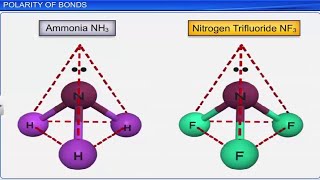
Nitrogen has three N-H bonds and one lone pair, so steric number is 4. Electron geometry is tetrahedral and molecular shape is trigonal pyramidal.
Predict Shape of XeF4
XeF4 has four bond pairs and two lone pairs. Six domains give octahedral electron geometry; two opposite lone pairs give square planar shape.
Counting double bonds as two domains
In VSEPR, a double or triple bond counts as one electron domain because it occupies one region around the central atom.
Calling NH3 tetrahedral shape
NH3 has tetrahedral electron-pair geometry but trigonal pyramidal molecular shape.
Steric number helps identify electron-pair geometry and hybridization.
Variables
σ bonds=sigma bonds attached to the central atom
lone pairs=non-bonding electron pairs on the central atom
Lone pairs repel more strongly than bonding pairs and reduce bond angles.
Variables
LP=lone pair
BP=bond pair
Valence Bond Theory & Hybridization
Overview
Valence bond theory explains covalent bond formation by overlap of half-filled atomic orbitals. Greater overlap gives stronger bonds, and the bond lies in the region where electron density is concentrated between nuclei. End-to-end overlap forms a sigma bond, while sidewise overlap forms a pi bond. Hybridization is the mixing of atomic orbitals of similar energy on the same atom to form equivalent hybrid orbitals with definite geometry. sp, sp2 and sp3 hybridizations explain linear, trigonal planar and tetrahedral arrangements respectively. Expanded geometries such as trigonal bipyramidal and octahedral are often described using sp3d and sp3d2 in the NCERT-level model. Hybridization also explains bond angles, equivalent bonds and the relation between s-character and bond strength.
- 1Only orbitals of comparable energy and proper orientation combine effectively in hybridization.
- 2Hybrid orbitals form sigma bonds or hold lone pairs; unhybridized p orbitals form pi bonds.
- 3Hybridization is predicted from steric number in many NEET questions.
- 4sp hybrid orbitals have 50% s-character, sp2 have 33.3%, and sp3 have 25%.
- 5Lone pairs can occupy hybrid orbitals and affect bond angles.
- 6VBT explains localized bonds but cannot explain paramagnetism of O2, which requires MOT.
Hybridization by Steric Number
2-sp, 3-sp2, 4-sp3, 5-sp3d, 6-sp3d2. Remember: the number tells total orbitals mixed.
Sigma-Pi Trick
Sigma is the first handshake along the axis; pi is the side hug added after sigma.
Hybridization of Carbon in Ethyne
Each carbon in C2H2 forms two sigma bonds and has steric number 2, so it is sp hybridized. The C≡C bond has one sigma and two pi bonds.
Hybridization of Nitrogen in NH3
Nitrogen has three sigma bonds and one lone pair, so steric number is 4 and hybridization is sp3.
Counting pi bonds in steric number
Steric number counts sigma bonds and lone pairs only. Pi bonds are not counted separately for hybridization.
Assuming all sp3 molecules have 109.5° angle
sp3 electron geometry is tetrahedral, but lone pairs reduce angles in NH3 and H2O.
For central atoms, steric number 2, 3, 4, 5 and 6 often correspond to sp, sp2, sp3, sp3d and sp3d2 hybridization respectively.
Variables
σ bonds=number of sigma bonds attached to central atom
lone pairs=number of lone pairs on central atom
Higher s-character pulls electron density closer to the nucleus, making bonds shorter and stronger.
Variables
s-character=percentage contribution of s orbital in hybrid orbital
Molecular Orbital Theory
Overview
Molecular orbital theory describes bonding by combining atomic orbitals to form molecular orbitals spread over the entire molecule. When atomic orbitals combine constructively, a lower-energy bonding molecular orbital forms; when they combine destructively, a higher-energy antibonding molecular orbital forms. Electrons fill molecular orbitals according to Aufbau principle, Pauli exclusion principle and Hund’s rule. Bond order is calculated as half the difference between bonding and antibonding electrons. A positive bond order indicates stability, while zero bond order means the molecule is unstable. MOT successfully explains bond order, relative bond length, bond enthalpy and magnetic behavior. Its most famous NEET application is explaining why O2 is paramagnetic, which Lewis theory and simple VBT fail to explain.
- 1Molecular orbitals belong to the whole molecule, not to a single atom.
- 2Only atomic orbitals of comparable energy and proper symmetry combine effectively.
- 3Filling order differs for lighter and heavier second-period diatomic molecules.
- 4For B2, C2 and N2, π2p orbitals are lower than σ2p due to s-p mixing.
- 5For O2, F2 and Ne2, σ2p is lower than π2p.
- 6Magnetic behavior is decided by the presence or absence of unpaired electrons.
Bond Order Shortcut
Bonding minus antibonding, then divide by 2. If answer is zero, the molecule is not stable.
O2 Memory
Oxygen is paramagnetic: remember 'Oxygen Owns Odd electrons' because it has two unpaired electrons in π* orbitals.
Bond Order of O2
O2 has 10 bonding electrons and 6 antibonding electrons in the valence MO set, so bond order = (10 - 6)/2 = 2.
Bond Order of Ne2
Ne2 has equal bonding and antibonding electrons, so bond order is 0 and the molecule is not stable under normal conditions.
Using the same MO order for all diatomic molecules
B2, C2 and N2 have π2p below σ2p, while O2, F2 and Ne2 have σ2p below π2p.
Judging magnetism from Lewis structure
Lewis structure of O2 shows all electrons paired, but MOT correctly predicts O2 is paramagnetic.
The most important formula of MOT; predicts stability, bond length and bond strength.
Variables
Nb=number of electrons in bonding molecular orbitals
Na=number of electrons in antibonding molecular orbitals
If bond order is zero or negative, stable bond formation is not expected.
Variables
bond order=net bonding effect in the molecule
Hydrogen Bonding & Metallic Bonding
Overview
Hydrogen bonding is a strong dipole-dipole interaction that occurs when hydrogen is bonded to a highly electronegative and small atom such as fluorine, oxygen or nitrogen, and is attracted to a lone pair on another electronegative atom. It may be intermolecular, as in water and HF, or intramolecular, as in o-nitrophenol. Hydrogen bonding explains high boiling points of H2O, HF and NH3 compared with similar hydrides, the open structure of ice, solubility of alcohols and biological structures such as proteins and DNA. Metallic bonding is explained by metal cations immersed in a sea of delocalized electrons. This model explains electrical conductivity, thermal conductivity, malleability, ductility and metallic lustre.
- 1Hydrogen bonding is stronger than ordinary dipole-dipole forces but weaker than covalent or ionic bonds.
- 2F, O and N are effective because they are small and highly electronegative.
- 3Intermolecular hydrogen bonding increases molecular association, viscosity and boiling point.
- 4Intramolecular hydrogen bonding occurs within the same molecule and may reduce water solubility.
- 5Metallic bond strength generally increases with number of valence electrons and charge density of metal ions.
- 6Delocalized electrons allow metal layers to slide without breaking the entire structure.
Hydrogen Bond Requirement
Hydrogen bonding needs H-FON: hydrogen directly bonded to F, O or N.
Metallic Bond Trick
Metals are 'positive islands in an electron ocean'. The ocean moves, so metals conduct.
Water and Ice
Ice has an open hydrogen-bonded structure, making it less dense than liquid water. This is why ice floats.
o-Nitrophenol vs p-Nitrophenol
o-Nitrophenol forms intramolecular hydrogen bonding and has lower boiling point than p-nitrophenol, which forms intermolecular hydrogen bonding.
Copper Wire
Copper conducts electricity because delocalized electrons move through the metallic lattice when potential difference is applied.
Assuming every H atom forms hydrogen bonding
Hydrogen bonding is significant only when hydrogen is attached to highly electronegative small atoms like F, O or N.
Forgetting intramolecular hydrogen bonding effects
Intramolecular hydrogen bonding may reduce intermolecular association, often lowering boiling point and water solubility compared with isomers.
Thinking metallic bonds are directional
Metallic bonding is non-directional due to delocalized electrons, which is why metals are malleable and ductile.
X-H is a polar covalent bond and Y is an electronegative atom with a lone pair. X and Y are commonly F, O or N.
Variables
X=electronegative atom covalently bonded to hydrogen
H···Y=hydrogen bond interaction with lone pair-bearing atom Y
Positive metal ions are held together by attraction to mobile delocalized electrons.
Variables
M+=metal cation or positive metal kernel
e− sea=mobile delocalized valence electrons
Formula Sheet
10For simple Lewis structures, single, double and triple bonds have bond orders 1, 2 and 3 respectively.
Variables
bond order=number of shared electron pairs between two bonded atoms
Used in molecular orbital theory to predict stability, bond length and magnetic behavior.
Variables
Nb=number of electrons in bonding molecular orbitals
Na=number of electrons in antibonding molecular orbitals
Dipole moment measures bond or molecular polarity. It depends on magnitude of separated charge and distance between charges.
Variables
μ=dipole moment
q=magnitude of charge
r=distance between charge centers
Used to evaluate Lewis structures by comparing valence electrons of a free atom with assigned electrons in the molecule.
Variables
V=number of valence electrons in the free atom
L=number of lone-pair electrons on the atom
B=number of bonding electrons around the atom
A polar covalent bond has separated partial charges, producing a bond dipole.
Variables
μ=dipole moment
q=magnitude of separated charge
r=bond length or distance between charge centers
5 more formulas locked
Sign up free to access all formulas with variables and explanations.
Quick Revision
12 Sign up to accessUnlock 12 Quick Revision Points
Sign up free to access all content, practice PYQs, and get AI explanations.
Learning Videos
4 Sign up to access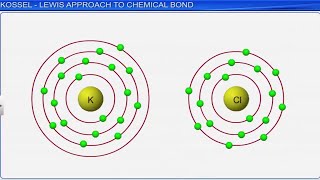


Unlock 4 Learning Videos
Sign up free to access all content, practice PYQs, and get AI explanations.
NEET PYQs — Chemical Bonding and Molecular Structure
91 Sign up to accessShowing 3 of 91 questions. Sign up to practice all with answers, explanations, and AI help.
Identify the correct statement about ClF₃ from the following options:
Match List I with List II: Choose the correct answer from the options given below:
The correct formal charges on oxygen atoms numbered 2, 1 and 3 respectively are:
Unlock the full Chemical Bonding and Molecular Structure experience
All diagrams, videos, quick revision, PYQ practice with AI explanations — plus mock tests, flashcards, and a personalised study plan.