
Some Basic Concepts of Chemistry Notes
Study Notes
Topics
10Nature of Matter, Classification, Properties and Changes
Overview
Chemistry begins with matter, which is anything that has mass and occupies space. NCERT classifies matter mainly in two ways: by physical state and by chemical composition. By physical state, matter exists as solid, liquid and gas, while by composition it is divided into pure substances and mixtures. Pure substances include elements and compounds with fixed composition, whereas mixtures contain two or more substances in variable proportions. Physical properties such as colour, density and melting point can be observed without changing composition, while chemical properties describe how a substance reacts. Physical changes alter state or appearance, but chemical changes form new substances. NEET questions often test classification, examples and the difference between physical and chemical changes.
- 1All compounds are pure substances, but all pure substances are not compounds because elements are also pure substances.
- 2A mixture can be separated by physical methods such as filtration, distillation, crystallisation or chromatography.
- 3A compound can be separated into elements only by chemical methods.
- 4The composition of a compound is fixed, while the composition of a mixture is variable.
- 5Melting of ice is a physical change; rusting of iron is a chemical change.
- 6States of matter depend on intermolecular forces and kinetic energy of particles.
- 7NEET often asks examples: air is a homogeneous mixture, milk is a colloidal mixture, brass is an alloy.
Pure vs Mixture Shortcut
Pure has a fixed recipe; mixture has a flexible recipe. If composition can change, think mixture.
Physical Change Clue
If only size, shape or state changes, it is usually physical. If smell, gas, heat, precipitate or colour due to reaction appears, suspect chemical change.
Kitchen Chemistry
Dissolving salt in water forms a homogeneous mixture, while cooking food involves chemical changes because new substances and flavours form.
Daily-Life Classification
Gold jewellery is usually a mixture or alloy, pure copper is an element, water is a compound and muddy water is a heterogeneous mixture.
Calling Air a Compound
Air is not a compound because its gases are not chemically combined in fixed ratio. It is a homogeneous mixture.
Confusing Molecule and Compound
O2 is a molecule but not a compound. A compound must contain different elements chemically combined.
Assuming All Irreversible Changes Are Chemical
Some physical changes like breaking glass may be irreversible but do not produce a new substance.
Density is a physical property used to identify and compare substances.
Variables
Density=Mass per unit volume of a substance
mass=Amount of matter present in the sample
volume=Space occupied by the sample
Measurement, SI Units, Scientific Notation and Significant Figures
Overview
Chemical calculations depend on accurate measurement of mass, volume, temperature, amount of substance and time. NCERT emphasises SI units, prefixes, scientific notation and significant figures because they prevent numerical and conceptual errors. Accuracy means closeness to the true value, while precision means closeness among repeated measurements. A value like 2.00 g is more precise than 2 g because it contains more significant figures. Scientific notation expresses very large or small values as powers of ten, such as 6.022 × 10^23. Dimensional analysis uses unit conversion factors to change one unit into another without changing the physical quantity. NEET often tests significant figure rules, unit conversions and precision versus accuracy.
- 1Accuracy and precision are different; a measurement can be precise but inaccurate.
- 2Exact numbers such as counted atoms or defined conversion factors do not limit significant figures.
- 3Prefixes simplify large and small units: kilo = 10^3, milli = 10^-3, micro = 10^-6, nano = 10^-9.
- 4Always convert units before substituting in formulas.
- 5Scientific notation avoids ambiguity in zeros, especially for numbers like 1000.
- 6Dimensional analysis is a powerful NEET shortcut for unit-based numericals.
Accuracy vs Precision
Accuracy is hitting the bullseye; precision is grouping the arrows together.
Zeros Rule
Leading zeros are just placeholders; trapped zeros are important; decimal-ending zeros are deliberate and significant.
SI Prefix Ladder
King Henry Died By Drinking Chocolate Milk helps remember kilo, hecto, deca, base, deci, centi, milli.
Significant Figure Example
2.5 × 3.42 = 8.55, but final answer is 8.6 because 2.5 has only two significant figures.
Unit Conversion Example
25 mL = 25 × 10^-3 L = 0.025 L. This conversion is essential before calculating molarity.
Rounding Too Early
Do not round intermediate steps in NEET numericals. Round only the final answer according to significant figures.
Mixing mL and L in Molarity
Molarity always uses litre of solution, not millilitre, unless converted.
Treating 0.0500 as Two Significant Figures
0.0500 has three significant figures because the two zeros after 5 are after the decimal and are significant.
Used to express very large or very small chemical quantities compactly.
Variables
N=Coefficient between 1 and 10
n=Integer power of ten
Measures how far an experimental result is from the accepted value.
Variables
experimental value=Measured value obtained in experiment
true value=Accepted or standard value
Laws of Chemical Combination
Overview
The laws of chemical combination explain why substances combine in fixed, simple and predictable ratios. The law of conservation of mass says mass is neither created nor destroyed in a chemical reaction. The law of definite proportions says a pure compound always contains the same elements in the same mass ratio. The law of multiple proportions states that when two elements form more than one compound, the masses of one element combining with a fixed mass of the other are in simple whole-number ratios. Gay-Lussac’s law deals with simple volume ratios of reacting gases, while Avogadro’s law says equal volumes of gases at the same temperature and pressure contain equal numbers of molecules. These laws directly support atomic theory, formula writing and stoichiometry.
- 1Law of conservation of mass is obeyed in ordinary chemical reactions, not nuclear reactions.
- 2Law of definite proportions applies only to pure compounds, not mixtures.
- 3For multiple proportions, always keep the mass of one element fixed before comparing the other.
- 4Gas volume laws are valid only when gases are measured under same temperature and pressure.
- 5Avogadro’s law explains why gaseous volume ratios correspond to molecular ratios.
- 6Balanced chemical equations obey conservation of atoms and mass.
Laws Order Mnemonic
Conserve Definite Multiple Gas Avogadro = CDMGA: Count Definite Masses, Gases Agree.
Multiple Proportions Trick
Fix one element first, then compare the other. Without fixing one element, the ratio is meaningless.
Water Composition
Pure water from any source contains hydrogen and oxygen in the mass ratio 1:8, illustrating definite proportions.
CO and CO2
In CO and CO2, fixed carbon mass combines with oxygen masses in the ratio 1:2, showing multiple proportions.
Applying Definite Proportions to Mixtures
Salt solution can have variable salt content, so the law of definite proportions does not apply to it.
Forgetting Same Temperature and Pressure
Gay-Lussac and Avogadro gas volume comparisons are valid only at the same temperature and pressure.
Using Grams Instead of Volumes in Gay-Lussac Law
Gay-Lussac’s law is about gaseous volumes, not masses.
Mass remains constant during a chemical reaction in a closed system.
Variables
reactants=Substances consumed in a chemical reaction
products=Substances formed in a chemical reaction
Volume of a gas is directly proportional to the number of moles at constant temperature and pressure.
Variables
V=Volume of gas
n=Number of moles of gas
T=Temperature
P=Pressure
Atomic, Molecular and Formula Masses
Overview
Atoms are extremely small, so their masses are expressed relative to the atomic mass unit, u. One atomic mass unit is defined as one-twelfth of the mass of one carbon-12 atom. Relative atomic mass is the average mass of atoms of an element compared with 1 u and accounts for natural isotopic abundance. Molecular mass is the sum of atomic masses of all atoms in a molecule, such as H2O or CO2. Formula mass is used for ionic compounds such as NaCl because they do not exist as discrete molecules; it is calculated from the empirical formula unit. These ideas connect microscopic particles with measurable gram quantities and prepare students for mole concept calculations.
- 1Atomic mass and molar mass have same number but different units: u for one particle, g mol^-1 for one mole.
- 2Chlorine atomic mass is about 35.5 u because natural chlorine is a mixture of isotopes.
- 3Molecular mass is used for covalent molecules; formula mass is preferred for ionic compounds.
- 4For hydrates, include water of crystallisation in formula mass.
- 5Always multiply atomic mass by subscript before adding.
- 6Brackets in formulae multiply all atoms inside, as in Ca3(PO4)2.
Molecular Mass Rule
Subscript means multiply first, then add. Bracket means multiply everything inside.
u vs g mol^-1
One particle talks in u; one mole talks in grams per mole.
Calcium Carbonate
Formula mass of CaCO3 = 40 + 12 + 48 = 100 u, making it useful for quick percentage composition calculations.
Carbon Dioxide
Molecular mass of CO2 = 12 + 32 = 44 u; molar mass = 44 g mol^-1.
Ignoring Brackets
In Ca3(PO4)2, oxygen atoms are 8, not 4. The outside 2 multiplies both P and O.
Using Molecular Mass for Ionic Compounds
NaCl does not exist as separate NaCl molecules in solid state; use formula mass.
Forgetting Isotopic Abundance
Average atomic mass is not a simple average unless isotopes are equally abundant.
Defines the relative scale used for atomic masses.
Variables
u=Atomic mass unit
carbon-12=Isotope of carbon used as standard
Used when an element has naturally occurring isotopes.
Variables
isotopic mass=Mass of a particular isotope
fractional abundance=Abundance percentage divided by 100
Mole Concept, Molar Mass and Avogadro Constant
Overview
The mole connects the microscopic world of atoms, molecules and ions with measurable laboratory quantities. One mole contains exactly 6.022 × 10^23 elementary entities, known as the Avogadro constant. The mass of one mole of a substance is called molar mass and is expressed in g mol^-1. For example, one mole of carbon atoms has a mass of 12 g, while one mole of water molecules has a mass of 18 g. At STP in many school-level problems, one mole of an ideal gas occupies 22.4 L. Mole concept is the most important calculation tool in this chapter because it links mass, particles, gas volume and chemical equations. NEET repeatedly tests these interconversions.
- 1Mole concept is like a dozen, but a mole counts 6.022 × 10^23 entities.
- 2One mole of O atoms and one mole of O2 molecules are different: O2 contains two moles of O atoms.
- 3Mass depends on molar mass, but particle count for one mole is always Avogadro constant.
- 4The number of atoms in molecules requires multiplying molecules by atoms per molecule.
- 5Use 22.4 L mol^-1 only when the question specifies STP or compatible ideal gas conditions.
- 6Mole map questions are common in NEET and can be solved by converting everything to moles first.
Mole Triangle
Mass on top, moles and molar mass at bottom: mass = moles × molar mass.
Mole Conversion Mantra
Mass? Divide by M. Particles? Divide by NA. Gas volume at STP? Divide by 22.4.
Entity Alert
A mole counts whatever entity is written after it: atoms, molecules, ions, electrons or formula units.
Particles in Water
9 g H2O = 9/18 = 0.5 mol molecules = 0.5 × 6.022 × 10^23 molecules.
Atoms in Oxygen Gas
16 g O2 = 0.5 mol O2 molecules. It contains 1 mol O atoms because each O2 molecule has 2 O atoms.
Confusing Oxygen Atom and Oxygen Molecule
1 mol O2 molecules contains 2 mol O atoms. Always check whether O or O2 is written.
Using 22.4 L for Liquids and Solids
22.4 L mol^-1 is for gases at STP, not for water liquid, sodium chloride solid or other condensed substances.
Not Converting Mass to Grams
Molar mass in g mol^-1 requires mass in grams unless units are consistently changed.
Converts a given mass into amount of substance.
Variables
n=Number of moles
m=Given mass in grams
M=Molar mass in g mol^-1
Gives number of atoms, molecules, ions or formula units.
Variables
N=Number of particles
n=Number of moles
NA=Avogadro constant, 6.022 × 10^23 mol^-1
Percentage Composition, Empirical Formula and Molecular Formula
Overview
Percentage composition tells the mass percentage of each element in a compound. It is calculated from the formula using atomic masses and molar mass, or experimentally from elemental analysis. Empirical formula gives the simplest whole-number ratio of atoms in a compound, while molecular formula gives the actual number of atoms in one molecule. For example, CH2O is the empirical formula of glucose, but its molecular formula is C6H12O6. To find an empirical formula from percentage data, assume 100 g sample, convert masses to moles, divide by the smallest mole value and convert to whole numbers. Molecular formula is obtained by multiplying empirical formula by a whole-number factor derived from molar mass.
- 1Empirical and molecular formulae may be the same, as in H2O and CO2.
- 2Compounds with different molecular formulae can have the same empirical formula.
- 3Percentage composition is useful for checking purity and determining formulae.
- 4Rounding must be logical; ratios like 1.5 require multiplying all values by 2.
- 5Do not multiply only one element while converting fractional ratios.
- 6The molecular formula factor must be a whole number.
Empirical Formula Steps
Percent to mass, mass to mole, divide by small, multiply to whole, write the formula.
Molecular Formula Factor
Big mass divided by small formula mass tells how many small units make the big molecule.
Glucose
Glucose has empirical formula CH2O and molecular mass 180. Empirical formula mass = 30, so n = 6 and molecular formula is C6H12O6.
Water Percentage Composition
In H2O, hydrogen percent = 2/18 × 100 = 11.1 percent and oxygen percent = 16/18 × 100 = 88.9 percent.
Using Percentage Directly as Mole Ratio
Percentage gives mass ratio, not atom ratio. Always convert each mass to moles.
Rounding 1.5 to 2
Do not round 1.5 to 2. Multiply all ratios by 2 to get whole numbers.
Forgetting to Calculate Molecular Formula
If molar mass is given, empirical formula alone is usually not the final answer.
Calculates how much of a compound’s mass is due to a particular element.
Variables
mass of element=Total mass contributed by that element in one mole of compound
molar mass=Mass of one mole of the compound
Converts elemental mole amounts into simplest atomic ratio.
Variables
moles of each element=Mass of element divided by atomic mass
smallest mole value=Lowest mole value among all elements
Balanced Chemical Equations and Stoichiometry
Overview
Stoichiometry is the calculation of reactants and products in a chemical reaction using a balanced chemical equation. A balanced equation obeys the law of conservation of mass because the number of atoms of each element is equal on both sides. The coefficients in a balanced equation represent mole ratios, not mass ratios. For example, in 2H2 + O2 → 2H2O, 2 moles of hydrogen react with 1 mole of oxygen to form 2 moles of water. Most NEET stoichiometry problems become easy when every given quantity is first converted into moles, then the balanced equation mole ratio is applied, and finally the answer is converted into the required unit such as grams, particles or gas volume.
- 1Balanced chemical equations are quantitative recipes of reactions.
- 2A coefficient before a formula multiplies the entire formula.
- 3For gases at same temperature and pressure, mole ratio equals volume ratio.
- 4Mass ratio must be calculated using mole ratio and molar masses.
- 5In NEET, mole ratio errors are more common than arithmetic errors.
- 6The balanced equation is the bridge between reactant and product quantities.
Stoichiometry Five Steps
Balance, convert to moles, compare coefficients, calculate required moles, convert to asked unit.
Coefficient Meaning
Coefficients speak in moles, molecules and gas volumes, but not directly in grams.
Water Formation
If 4 g H2 reacts completely with excess O2, moles H2 = 2. From 2H2 → 2H2O, moles H2O = 2, so mass water = 36 g.
CO2 from Calcium Carbonate
CaCO3 → CaO + CO2. 100 g CaCO3 gives 1 mol CO2, which is 44 g or 22.4 L at STP.
Changing Subscripts While Balancing
Changing H2O to H2O2 changes the compound. Only coefficients may be changed.
Using Unbalanced Equation
A mole ratio from an unbalanced equation gives wrong answers even if arithmetic is correct.
Using Mass Ratio as Coefficient Ratio
In 2H2 + O2 → 2H2O, the mole ratio H2:O2 is 2:1, but the mass ratio is 4:32.
Core formula for stoichiometric conversion between substances.
Variables
moles required=Moles of substance asked in the question
moles given=Moles of substance provided in the question
coefficient required=Balanced equation coefficient of required substance
coefficient given=Balanced equation coefficient of given substance
Converts calculated moles into gram mass.
Variables
mass=Mass in grams
moles=Amount of substance
molar mass=Mass of one mole in g mol^-1
Limiting Reagent, Excess Reagent and Percentage Yield
Overview
In real stoichiometry problems, reactants are often not present in exact balanced-equation proportions. The reactant that gets completely consumed first is called the limiting reagent, and it determines the maximum amount of product formed. The other reactant is present in excess and remains partly unused. To identify the limiting reagent, convert each reactant into moles and compare available mole ratio with the balanced equation ratio, or calculate product possible from each reactant; the smaller product amount identifies the limiting reagent. The theoretical yield is the maximum calculated product, while actual yield is the amount obtained experimentally. Percentage yield compares actual yield with theoretical yield and is usually less than 100 percent due to losses and side reactions.
- 1Never choose limiting reagent by smaller mass alone; compare moles and coefficients.
- 2If reactants are in exact stoichiometric ratio, no reactant is in excess.
- 3Limiting reagent controls product formation even if present in larger mass.
- 4Percentage yield cannot normally exceed 100 percent in ideal reporting; if it does, impurity or measurement error is likely.
- 5Theoretical yield must be calculated from the limiting reagent.
- 6Excess left can be calculated by subtracting amount consumed from amount initially present.
Limiter Rule
The smaller product wins: calculate product from each reactant, choose the smaller amount.
Yield Formula
Actual is what you got; theoretical is what you thought. Got/thought × 100.
Hydrogen and Oxygen
For 2H2 + O2 → 2H2O, if 3 mol H2 and 1 mol O2 are present, O2 is limiting because 1 mol O2 can react with only 2 mol H2.
Percentage Yield
If theoretical yield is 10 g and actual yield is 8 g, percentage yield = 8/10 × 100 = 80 percent.
Choosing Smaller Mass as Limiting Reagent
A smaller mass may have more moles if molar mass is low. Always convert to moles.
Calculating Theoretical Yield from Excess Reagent
Theoretical yield must come from limiting reagent only.
Ignoring Balanced Coefficients
Equal moles do not always mean exact reaction; the equation may require 2:1 or 3:2 ratios.
Calculate product from each reactant; the smaller value determines limiting reagent.
Variables
moles product=Product moles possible from a reactant
moles reactant=Available moles of the reactant
coefficient product=Balanced equation coefficient of product
coefficient reactant=Balanced equation coefficient of reactant
Measures efficiency of a chemical preparation.
Variables
actual yield=Product obtained experimentally
theoretical yield=Maximum product calculated from limiting reagent
Concentration Terms and Solution Calculations
Overview
A solution contains solute dissolved in solvent, and its concentration tells how much solute is present in a given amount of solution or solvent. NCERT introduces several concentration terms: mass percentage, volume percentage, mass by volume percentage, parts per million, mole fraction, molarity and molality. Molarity is moles of solute per litre of solution and changes with temperature because volume changes. Molality is moles of solute per kilogram of solvent and is temperature independent because mass does not change with temperature. Mole fraction compares moles of one component with total moles of all components. NEET commonly asks direct formula application, dilution, and choosing the temperature-independent concentration term.
- 1Solution mass = solute mass + solvent mass.
- 2Molarity uses volume of solution, not volume of solvent.
- 3Molality uses mass of solvent, not mass of solution.
- 4Mole fractions of all components add up to 1.
- 5ppm is used for very dilute solutions, such as pollutants in water.
- 6For reactions in solution, moles = molarity × volume in litres.
- 7Always convert mL to L before using molarity.
Molarity vs Molality
Molarity uses litres of solution; molality uses kilograms of solvent. Lowercase m is mass-based.
Dilution Mantra
Dilution changes volume and concentration, not moles of solute: M1V1 = M2V2.
Mole Fraction Check
All mole fractions must add to 1. If not, recheck moles.
Molarity Calculation
If 0.5 mol NaCl is dissolved to make 2 L solution, molarity = 0.5/2 = 0.25 M.
Dilution Calculation
To prepare 500 mL of 0.1 M solution from 1 M stock: V1 = M2V2/M1 = 0.1 × 500/1 = 50 mL.
Using Solvent Volume for Molarity
Molarity uses total solution volume, not only solvent volume.
Using Solution Mass for Molality
Molality uses kg of solvent, not kg of solution.
Forgetting mL to L Conversion
250 mL is 0.250 L. Using 250 L gives an answer off by a factor of 1000.
Expresses solute mass as percentage of total solution mass.
Variables
mass of solute=Mass of dissolved substance
mass of solution=Mass of solute plus solvent
Fraction of total moles contributed by component A.
Variables
χA=Mole fraction of component A
nA=Moles of component A
nB=Moles of component B
Moles of solute present per litre of solution.
Variables
M=Molarity in mol L^-1
n=Moles of solute
V=Volume of solution in litres
Integrated NEET Revision, Mind Map and Numerical Strategy
Overview
Some Basic Concepts of Chemistry is a calculation-heavy chapter, but all questions follow a connected logic. First, classify the substance and understand whether it is an atom, molecule, ion, formula unit, compound or mixture. Next, measure correctly using SI units and significant figures. Then use atomic and molecular masses to convert given quantities into moles. Once moles are known, apply Avogadro constant, molar volume, concentration formulae or balanced equation coefficients depending on the question. For empirical formula questions, convert composition to mole ratio. For reaction problems, use stoichiometry and check limiting reagent before calculating yield. NEET rewards students who build one mole-centred map rather than memorising isolated formulas.
- 1The mole is the central hub connecting mass, particles, volume and concentration.
- 2Chemical equations give mole ratios, while molar masses convert between moles and grams.
- 3Avogadro constant converts between moles and number of particles.
- 4Empirical formula problems are composition-to-ratio problems.
- 5Stoichiometry problems are given-quantity to required-quantity problems through mole ratio.
- 6Limiting reagent problems require checking all reactants, not just the one mentioned first.
- 7NCERT examples and in-text questions are highly relevant for NEET basics.
Central Mole Mantra
When confused, go to moles. From moles, you can go to mass, particles, gas volume, solution concentration or stoichiometric product.
NEET Calculation Order
Read entity, balance equation, convert units, convert to moles, apply ratio, answer with units.
Final Check
Ask: Is my answer in the unit asked? Did I use the correct entity? Did I round only at the end?
Integrated Example
For 50 mL of 0.2 M HCl reacting with NaOH, moles HCl = 0.2 × 0.050 = 0.010 mol. Use balanced equation to find required NaOH moles.
Entity Check Example
If asked for atoms in 0.5 mol CO2, first find molecules = 0.5NA, then multiply by 3 atoms per molecule to get 1.5NA atoms.
Formula Hunting Without Concept
Many questions combine two or three formulas. Build the mole map instead of memorising isolated equations.
Ignoring NCERT Language
NEET conceptual questions often use NCERT wording such as formula mass, amount of substance and significant figures.
Skipping Limiting Reagent Check
Whenever two reactants are given, check limiting reagent before calculating product.
A compact formula set covering mass, particles, gas volume and solution moles.
Variables
n=Number of moles
m=Mass in grams
M=Molar mass or molarity depending on context
N=Number of particles
NA=Avogadro constant
VSTP=Gas volume at STP
V(L)=Solution volume in litres
Universal strategy for reaction-based numerical problems.
Variables
given quantity=Mass, particles, gas volume or solution data provided
coefficient ratio=Ratio from balanced chemical equation
required quantity=Final answer requested in the question
Formula Sheet
10Density is a physical property used to identify and compare substances.
Variables
Density=Mass per unit volume of a substance
mass=Amount of matter present in the sample
volume=Space occupied by the sample
Used for cuboidal solids in basic measurement of matter.
Variables
length=Longest dimension of the object
breadth=Width of the object
height=Vertical dimension of the object
Used to express very large or very small chemical quantities compactly.
Variables
N=Coefficient between 1 and 10
n=Integer power of ten
Measures how far an experimental result is from the accepted value.
Variables
experimental value=Measured value obtained in experiment
true value=Accepted or standard value
A conversion factor is a ratio equal to 1, used to convert units.
Variables
given quantity=Original measured value
conversion factor=Ratio connecting old and new units
5 more formulas locked
Sign up free to access all formulas with variables and explanations.
Quick Revision
12 Sign up to accessUnlock 12 Quick Revision Points
Sign up free to access all content, practice PYQs, and get AI explanations.
Learning Videos
4 Sign up to access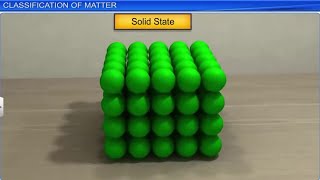
Unlock 4 Learning Videos
Sign up free to access all content, practice PYQs, and get AI explanations.
NEET PYQs — Some Basic Concepts of Chemistry
38 Sign up to accessShowing 3 of 38 questions. Sign up to practice all with answers, explanations, and AI help.
The number of hydrogen atoms present in 5.4 g of urea is: (Given: Molar mass of urea = 60 g mol⁻¹; Nₐ = 6.022 × 10²³ particles mol⁻¹)
Among the following, choose the ones with equal number of atoms. A. 212 g of Na₂CO₃(s) [molar mass = 106 g] B. 248 g of Na₂O(s) [molar mass = 62 g] C. 240 g of NaOH(s) [molar mass = 40 g] D. 12 g of H₂(g) [molar mass = 2 g] E. 220 g of CO₂(g) [molar mass = 44 g] Choose the correct answer from the options given below :
Dalton’s Atomic theory could not explain which of the following?
Unlock the full Some Basic Concepts of Chemistry experience
All diagrams, videos, quick revision, PYQ practice with AI explanations — plus mock tests, flashcards, and a personalised study plan.